InnoVita SARS-CoV Virus Deactivation Performance Overview Using 254nm UV-C Light
National Institutes of Health (NIH) Lab Test Comparison
InnoVita UV-C Technology Exceeds NIH’s Lab Tests By 645%
Summary
This paper’s goal is to highlight the recent scientific tests and conclusions undertaken by the National Institutes of Health (NIH) regarding the use and effectiveness of UV-C light for the irradiation of the SARS-CoV-2 virus. In addition, this paper will provide an overview and comparison of the InnoVita UV-C technology to the NIH SARS-CoV-2 UV-C results.
Background
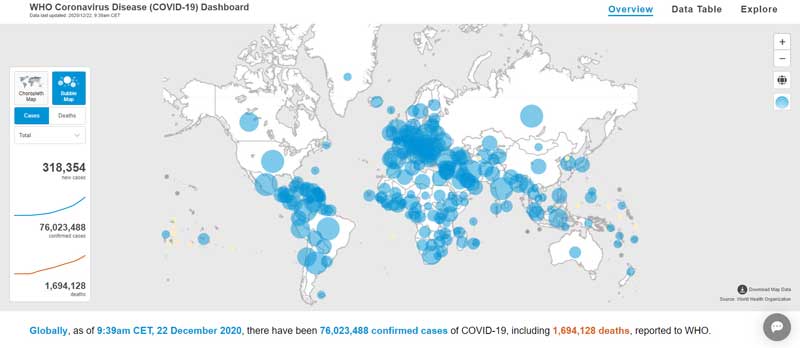
On March 11, 2020 the World Health Organization (WHO) announced that SARS-CoV-2 epidemic is now a pandemic. As of December 22, 2020, there are recorded 76 million cases, 1.7 million deaths, a new 70% more infectious virus strain, and 2 approved vaccines.
In a recent NIH paper titled; “Aerosol and Surface Stability of SARS-CoV-2 as Compared with SARS-CoV-1” (March 17, 2020) (1); the tests showed that the SARS-CoV-2 virus “remained viable in aerosols throughout the duration of our experiment (3 hours), with a reduction in infectious titer from 103.5 to 102.7 TCID50 per liter of air (22.85% reduction).” Based on this data, it is realistic to predict that the virus will remain airborne and viable for over 6 hours.
Airborne Virus Distribution Simulations
 An article which was published by Business Insider in September of 2020 showed how one passenger on a bus (without outside ventilation) infected 23 people during the 1-hour bus ride(2).
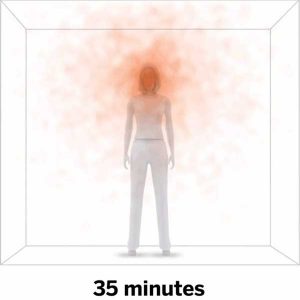
These simulations and images on the left are from an article by Elpais titled;”A Room, A Bar And A Classroom: How The Coronavirus Is Spread Through The Air”(3). The first simulation shows how the “virus density” increases with every exhalation.
And with this second simulation, the rate of increase in virus density varies depending upon the type of communication the room participants are undertaking.
Here, you can see the virus density can increase by a factor of 50 over an hour depending upon the type of communication.
For example, with shouting or singing, one person can generate approximately 1,500 infectious doses in 1 hour inside a closed space.
In this last image we see the impacts on a space occupied with 14 people over a 4-hour period without ventilation.
Here, with no measures taken, the infection rate could be as high as 80%. Referring back to the Business Insider bus infection story at the top of the page; over a 1-hour period, 34.32% of the passengers became infected from one person.
 Using this type of data and incorporating it with:
- NIH SARS-CoV-2 Aerosol Decay Rates
- NIH SARS-CoV-2 Half Life Rates
- NIH SARS-CoV-2 mW/cm2 Dosage Values (99.999%)
- Local Infection Rate (Positivity Rate)
- Other Infection Rate Data (3rd Party)
- Virus Exhalation Shedding Model Based On Bio-Activity
- Virus Exhalation Biomarker AI Mapping
- # Of Room Occupants
- Temperature Sensor
- Relative Humidity Sensor
- Patent Pending
We (InnoVita) are developing reliable models using artificial intelligence (AI) to design, and optimize SARS-Cov-19 Ultraviolet Sterilization Technology (UST) which will reduce the SARS-Cov-2 viral density and corresponding ability to infect interior space occupants.
The use of ultraviolet light to irradiate bacteria, viruses and other pathogens, both airborne and on surfaces; goes back to 1930 when F.L. Gates published a series of articles providing the first bactericidal data using low-pressure Mercury UV lamps for Staphylococcus aureus and Bacillus coli (B. coli)(4).
The research and use of UV as an irradiance source for bacteria and viruses, dropped significantly upon the development and introduction of antibiotics. And in the 1980’s there was a resurgence in the interest and use; yet, UV technology and applications for the irradiation of air-borne pathogens decreased.
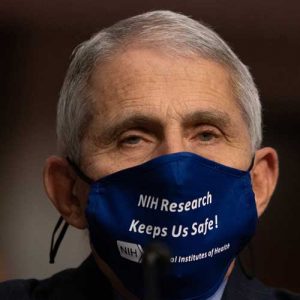 Finally, with Dr. Anthony Fauci stating; “I don’t really see us eradicating it (SARS-CoV-2)”, only implores the scientific and technology sectors to collaborate and produce solutions that will work for this and future pandemics.
And the past head of the US FDA , Dr. Scott Gottlieb, stated on January 14, 2021; “We could be facing a situation where we have perpetual infection heading into the spring and the summer (2021), as these variants (UK + South Africa) get a foothold here.”
NIH Background and Use of Ultraviolet Light For Sterilization
A quick clarification between the CDC and the NIH: The National Institutes of Health (NIH) primarily focuses on diseases and their processes of replication, transmission, and eradication(5). While the Centers for Disease Control focus on the distribution and effects these pathogens have in a population. Each has its own research divisions, however, the CDC relies significantly on the research the NIH produces in order to produce its guidelines and remediative recommendations.
The NIH has research data on the use and application of UV light (far spectrum”C”) for airborne pathogens going back to 1937 when William F. Wells used 254nm UV light to irradiate aerosolized measles among children in suburban Philadelphia day schools. Here, the schools without the UV irradiation had a 55.3% susceptibility (infection) rate as compared to 14.5% for schools which used the UV(6).
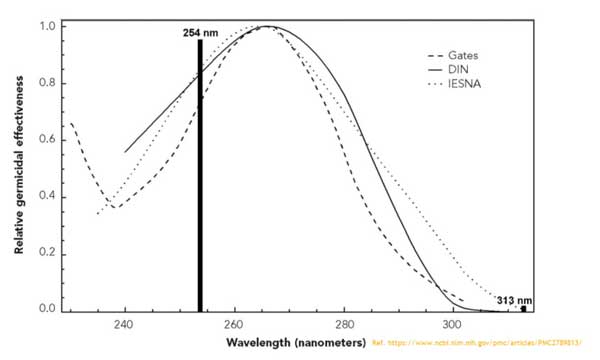 From 1937 up to the present, there are dozens of papers on the application and use of UV light for airborne pathogens. However, most of these papers employ UV light where the room(s) must be empty of any personnel due the harmful exposure effects of the UV light.
In June of 2020, the NIH published a paper titled; “Ultraviolet Light Fights New Virus”(7). This paper highlights the effectiveness of using UV light “to disinfect hospital rooms and other public spaces”. Additionally, in this paper the NIH highlights a number of UV products manufactured around the world that are being used to disinfect surfaces that are routinely touched by people. Lacking in this paper is any mention of a manufacturer producing a UV product which will disinfect the air while the room/space has occupants.
Another paper produced by the NIH in June of 2020 titled; “Far UV-C Light (222 nm) Efficiently And Safely Inactivates Airborne Human Coronaviruses”(8), demonstrated that both 222nm and 254nm UV spectra have a deactivation effectiveness rate of 99.97% on aerosolized SAR-Cov virus when applying a 2 mJ/cm2 expose dose.
InnoVita Background And Its Focus On Ultraviolet Light For Virus Sterilization Applications
InnoVita, an artificial intelligence and advanced sensor technology company with 20 years of experience in developing products which; (a) monitor and improve the safety of personnel, and (b) optimize industrial processes to reduce costs and environmental impacts, is now focusing its technology and expertise on the irradiation of the SAR-CoV-2 virus using UV light.
Founded by Joseph P. Conroy; he has received over $ 500,000 in research grants(9) from the DOE & EPA for technology development. And one of Conroy’s recent companies sold for 8 figures.
Notable and relative accomplishments of Conroy and his team include:
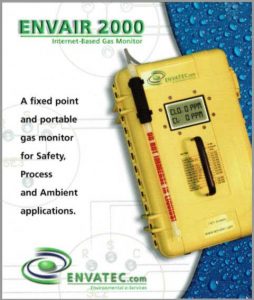
- 1st company in the world to commercially develop a portable gas analyzer which used Envatec’s Active Sampling Neural Network (ASNN)™ Technology and advanced sensor technology to, (a) differentiate between very similar gases such as Chlorine and Chlorine dioxide, and (b) detect gases in the parts per trillion range as compared to the industry standard of parts per million.
- Developed AI models using our own AI software (still in use) to improve the electrical load forecast of regional power grids, saving millions annually to reduce fuel costs, and simultaneously reduce greenhouse gas emissions.
It is also the goal of InnoVita to develop sensors which will be able to identify and quantify viruses using exhaled VOC biomarkers. Our initial research shows that the current VOC biomarker gas profile for SARS-CoV-2 easily fits within the performance criteria of the ENVAIR2000.
We have already begun conceptualizing and designing the process and how our AI and sensor technology will be able to discern and quantify viruses at the part-per-trillion concentration levels and use this new virus sensing technology as an input into the UV-C sterilization process. In addition, there are additional applications for continuous virus detection and monitoring in situ and portable across many industries.
Successful UV Applications of Aerosolized Bacteria & Viruses
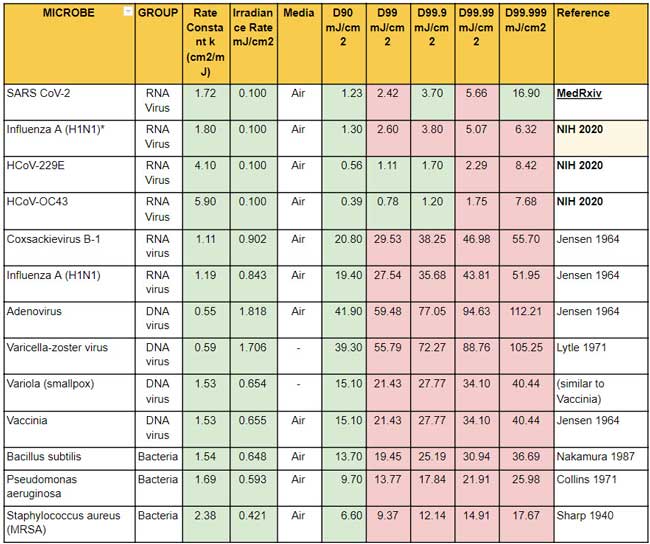
Over the past 100+ years UV light has been demonstrated to be an effective source of sterilization and deactivation for a broad spectrum of pathogens in the air, water and on surfaces. Table 1 below highlights a group of viruses and bacteria which UV light has demonstrated successful deactivation and sterilization.
Table 1: UV Rates & Doses To Achieve 90% to 99.99% Viral and Bacterial Deactivation
Notes
1-All values in green are actual, and all values in red are predicted (InnoVita).
2-All test UV Irradiance data other than “NIH 2020”, are suspect due to their data variance from the NIH data. Here, the virus “D90 mJ/cm2” data is much too high as compared to the same NIH virus data.
3-D90 = 90% virus/bacteria reduction, etc.
If you would like to receive a full copy of this paper (24 pages total) where we go into considerable detail on the science and effectiveness of UV-C 254nm light for the irradiation of 20+ viruses, and how the InnoVita technology compares with the NIH lab tests to achieve 99.9% effectiveness, please complete the form below.
InnoVita’s Team

Ramin Abrishamian Chief Executive Officer
30 years of operational experience developing new technologies, commercializing them and growing companies based on them.

Joseph Conroy Chief Technology Officer
20 year advanced sensor and AI technology visionary and architect. Joe has already filed 2 of 5 patents in advanced sensors and AI technology for the SARS-CoV-2 virus.

Carl Bomgardner AI & Software Director
40 year career of leading cutting edge AI and software technology development for Fortune 50 companies and startups.